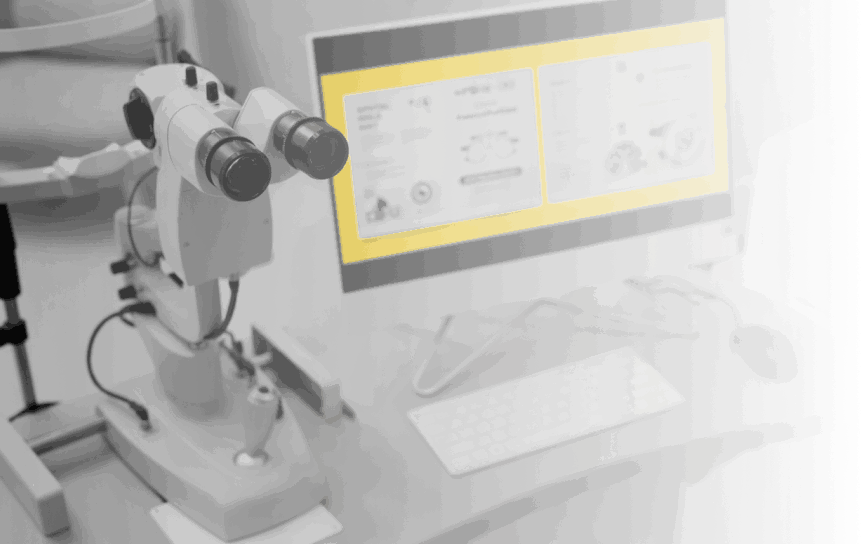
From 3 Days to 3 Hours: AI-Empowered Antibiotic Susceptibility Testing Modernization

AI/LLM, Healthcare

From 3 Days to 3 Hours: AI-Empowered Antibiotic Susceptibility Testing Modernization

BactoByte combines technology and science, introducing a new way to test bacteria and evaluate antibiotic effectiveness in near real time
through microscopy automation, computer vision, and AI-driven classification.

Antibiotic Susceptibility Test Time

72h → 3h

AI Bacterial Clasification Accuracy

95%

Faster Laboratory Analysis

80%

Project overview:

Client

BactoByte

Location

Israel

Industry

Healthcare

Services
IconHealthcare workflow modernizationIconCustom AI model developmentIconComputer vision for microscopy analysisIconMicroscope automation logicIconAdaptive focus & image reconstructionIconData engineering under lab conditionsIconManual labeling strategyIconDomain dataset designIconTwo-phase optimizationIconStatistical & clinical validation
Solution

Tailored AI microscopy solution for near-real-time antibiotic testing

Business Challenge

Have you ever faced

diagnostic delays caused by laboratory limitations?

Antibiotic testing takes 2-3 days, delaying the treatment of infections. The client aimed to cut assessment time to hours, while preserving clinical accuracy and the necessary lab processes

Icon

Long Bacterial Testing Hampers Efficient Treatment.

Traditional culture-based antibiotic testing is slow, which delays the selection of an appropriate antibiotic

Icon

Limited Microscope Capacity and Biological Constraints.

The microscope had to make images at varying depths of focus, under limited frequency, and only while the bacteria were static

Icon

Scarcity of Labeled Data in Lab Conditions.

We needed lots of labeled images to train AI systems, while labeling is extremely time-consuming, and experimental conditions provided very few samples.

Icon

Low Quality External Data.

Generic AI models require clean and consistent datasets. Data collected in real lab conditions didn’t fit due to noise and gaps.

Icon

The Need for Scientific and Statistical Validation.

In healthcare, the model is required to prove its scientific and statistical validity, even if it demonstrates precise results.

Discovery & Planning phase

1

Analyzed workflows, equipment, and imaging limits to plan automation opportunities

2

Defined modernization and AI scope while preserving proven laboratory processes.

3

Planned phased dataset growth under limited samples, labeling effort, and image variability.

4

Defined validation metrics with microbiologists and set a statistical framework to prove reliability.

Enable Powerful Healthcare Modernization that Removes Domain-Specific Limitations

The main blockers of AI in healthcare are data scarcity, clinical workflow constrains and limited equipment capacity.

Arrange a Full System Audit //

Project In Detail

We transformed the evaluation process while retaining existing laboratory equipment and reliable practices. Rather than replacing trusted systems, we reinforced them with automation and AI layers to enhance performance, minimize operational risk, and accelerate adoption, facilitating smooth integration into real clinical practice.

To overcome limitations in imaging frequency and thermal conditions, we developed automation algorithms that captured multiple focal layers for each sample and used extrapolation to determine optimal sharpness. This improved image consistency and created stable, high-quality data necessary for accurate AI training.

Since samples were limited, we developed a focused manual labeling strategy, classifying thousands of bacteria within each image and indicating antibiotic-exposed cases. This structured, domain-aware dataset taught the model to recognize biologically meaningful patterns and make reliable predictions.

We crafted a computer vision model that differentiates healthy, damaged, destroyed, and clustered bacteria. By analyzing morphology, clustering patterns, and light properties, the AI system transforms microscopic visual signals into clinically interpretable states, enabling precise evaluation.

We built a multi-parameter analysis engine assessing size, shape, aspect ratio, clustering, and intensity to classify results as effective, ineffective, or inconclusive. In a few hours, raw microscopy data is converted into real treatment insights, expediting clinical decisions.

We trained the neural network in two stages. First, one optimizer was used until the progress slowed. Then, we switched to another one with a different learning rate. This approach improved learning stability and elevated accuracy to over 95% for some strains. This confirmed the model’s reliability and consistency under real lab conditions.

While accuracy metrics were convincing, we went beyond by creating a mathematical framework to confirm the statistical reliability of the system’s predictions. Together with microbiologists, we also proved the system was clinically valid, ensuring that its results are scientifically meaningful and trustworthy, not just technically impressive.

Legacy / “As‑Is”

List icon

2–3 days for culture growth and manual analysis

List icon

Treatment adjustments only after the results are received

List icon

Limited ability to interpret morphology data

List icon

Microscopy is performed manually without adaptive automation

List icon

Decision models are not statistically verified

Modern Alternative

List icon

3–5 hours for the evaluation process

List icon

Treatment recommendations are available almost in real time

List icon

Analysis is based on multiple bacterial morphology parameters

List icon

Automated microscope operation with automatic focus optimization

List icon

AI predictions are mathematically validated and correspond to clinical practice

The Challenges We Faced During Workflow Transformation

Microscope Automation Under Lab Constraints

The microscope captured an image every 10 seconds, whereas exposure to light could destroy samples. The time window was limited, and the focus constantly changed. Even small delays affected results, so automation had to adapt to physical conditions rather than try to override them.

Extreme Data Shortage in Experimental Conditions

AI models need to be trained with structured, labelled data. Since the microscope was still experimental, we had limited sample availability and misaligned formats, meaning that the usable examples were very few.

Manual Labeling of Microscopic Images

Each image showed thousands of bacteria. Only medical experts could manually mark healthy, damaged, destroyed, and clustered cells, which required much time. Accurate results depended on careful human labeling, leaving no other way to ensure precision.

Imperfect Data from Laboratory Conditions

Real lab data were far from ideal test datasets, containing noise, missing values, and changing conditions. The AI models had to work reliably despite uneven lighting, biological differences, and environmental changes.

Accuracy Confirmed by Scientific Reliability

In healthcare, even 95% accuracy alone is not enough. We had to mathematically prove that the precise results were achieved not because of random correlations but thanks to scientific reliability, which makes the system applicable in real clinical practice.

Results

Results

We reinvented traditional antibiotic testing with AI to attain near real-time results and clinical precision

result

Near-Real-Time Antibiotic Testing

Reduced evaluation time from several days required for culture-based testing to 3-5 hours, expediting decisions in clinical infection treatments.

Scientifically Proven AI Framework

Crafted a mathematical model to prove predictions were statistically reliable, promoting the implementation in clinical practice.

Reusable Modernization Architecture

Developed an adaptable AI approach for microbiology that can bring support and innovation into future lab modernization projects.

Key Process Improvements

90% Faster Diagnostic Time

From 2–3 days → 3–5 hours

95%+ AI Classification Accuracy

For selected bacterial types

THOUSANDS Bacteria Analyzed

Per image during testing

4–5 Focus Layers

Automated multi-focus imaging

Lessons Learned from BactoByte

Square icon

Healthcare Problem First, Technology Second

Meaningful AI in healthcare starts with understanding a real problem, not chasing technology trends. By analyzing processes and testing approaches, we found the tools that meet clinical needs. Instead of adjusting the product to the AI tech, we ensured that technology serves outcomes.

Square icon

Collaboration with Industry Experts

Without deep domain expertise, AI could hardly solve healthcare problems. Close collaboration with medical professionals shaped development priorities and helped to connect clinical and technical perspectives. The resulting solution addressed real needs and worked effectively in practice.

Square icon

Work with Imperfect Real-World Data

Success comes from adapting technology to real conditions, not trying to get ideal data. By adjusting the solution to imperfect inputs, we ensured it was applicable in practice. Because if technology is unable to work with real data, the issue is the approach, not the data itself.

Square icon

Focus on the Impact

Clear goals guide better decisions. We focused on delivering reliable results faster to enable earlier treatment. Distinct priorities helped us determine what mattered most, efficiently allocate resources and budget, and avoid unnecessary steps and repeated redesign.

Square icon

Modernization Works Better than Total Rebuild

Successful healthcare modernization is more about improving what already works. By upgrading existing equipment and workflows instead of replacing them, we removed needless steps, accelerated processes, and built a solution that fits into and enhances real laboratory practice.

Square icon

Validation Makes AI Clinically Reliable

In healthcare software modernization, high accuracy alone is not enough. Clinical validation and statistical proof were required to ensure predictions were scientifically trustworthy. Only after this confirmation can the system move from experimental technology to a reliable clinical tool.

Start today!

We’d love to hear from you. Share your vision, and let’s explore how we can make it real together.

    By signing this form you agree to our Privacy Policy

    Our team will

    • 1 Process your request within 1-2 business days.
    • 2 Get back to you with an offer based on your project's scope and requirements.
    • 3 Set a call to discuss your future project in details and finalize the offer.
    • 4 Sign a contract with you to start working on your project.

    Corsac Technologies Corporation

    +1 416 505 4524 Toronto, Canada info@corsactech.com